
A little background … Channel Marketing Group manages Industrial Supply Trends as a service to the industry. Our core business is consulting with distributors, manufacturer reps, and manufacturers in the electrical, HVAC, and industrial supply business. One of our clients is NEMRA, which is the association for electrical reps. A couple of engagements have included developing their Rep of the Future and Manufacturer of the Future studies. So, we get deep into the space and see the dynamics between reps and manufacturers.
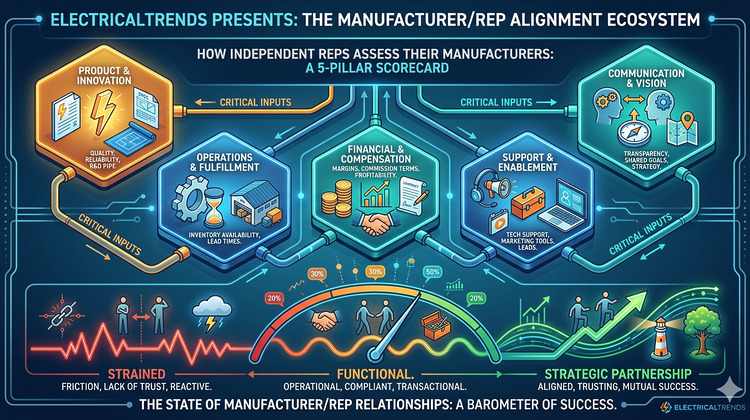
Recently, Gene Biben authored an article that touches on changes in the dynamic and how reps are now assessing their relationships (and, as an aside, we have more on the topic and other metrics for reps to consider … and can share the NEMRA 5 Pillars and other insights) but I thought the article, and The Manufacturer / Rep Alignment Ecosystem model could benefit manufacturer manufacturers and reps.
And if you are a distributor, there are opportunities to optimize your rep relationships as they can help you capture market share.
In Gene’s words …
“I have interviewed various manufacturer representatives and how they assess their manufacturers and the state of manufacturer / rep relationships.
Let me preface this by saying, all also shared that they have some manufacturers that they have great relationships with and who understand, embrace, and value the rep model, or at least the rep I was speaking with. But they also said a number of their manufacturers do not and some feel some of their manufacturers take them for granted and, in the words of one, are “clueless.” In the infamous words of a friend, it is a “smorgasbord” of relationships.
Should Customers Come First?
No.
In 1992 Hal Rosenbluth, the owner of a national travel agency wrote a very successful book entitled “The Customer Comes Second.” He philosophized that his people come first; take care of your people, and they will take care of your customers. The book became a best seller.
When I began in this industry, over 50 years ago, most reps felt their commitment to each manufacturer they represented was long term. Business was based upon trust and a handshake. While occasionally reps and manufacturers changed representation, it was rare. They viewed that their growth, as an agency, was directly tied into the relationships with their customers (typically distributors) and their manufacturers equally.
Many manufacturers had annual sales meetings and often came into the field to help develop local business and develop their own relationships with a goal of making customers(distributors and their customers) comfortable not only with their local representatives but with factory support. Does that happen today?
Not the same way. Some of this is due to channel change caused by consolidation. Senior management doesn’t meet local senior field management. That’s left to a regional manager who may or may not travel in the territory regularly … plus with some companies they change regularly.
This is according to the reps; I interviewed a few distributors who claim the same issue (and I grant you I didn’t talk to senior management at national chains). One high profile distributor told me the single most important factor in many of his product selection of relatively similar products is now local representation. He said he has little to no relationship with the vast majority of his manufacturers since COVID. He may know a name. Perhaps he meets them at an NAED or AD meeting but he doesn’t truly have relationships.
A rep told me he his regional managers are now so inundated with reporting that they are seldom in the field with his people visiting customers. A manufacturer told me the most significant formula to his company was the cost of sale. He said, like other manufacturers, his was in the process of laying off more inside and outside people and passing responsibility and roles off to his reps. But he also said “responsibility doesn’t mean that they can make decisions. They need to seek approval from the applicable department.”
When I asked if they had increased the reps’ compensation for these added responsibilities, he laughed citing they were considering a decrease to cut their overall costs but were considering a bonus to make up limited decreases. I asked if he understood bonuses, even if achieved, did not pay bills or salaries (which have to be paid monthly based upon dependable income streams), he said his sales department did, but he stated sales no longer has much to say at his company.
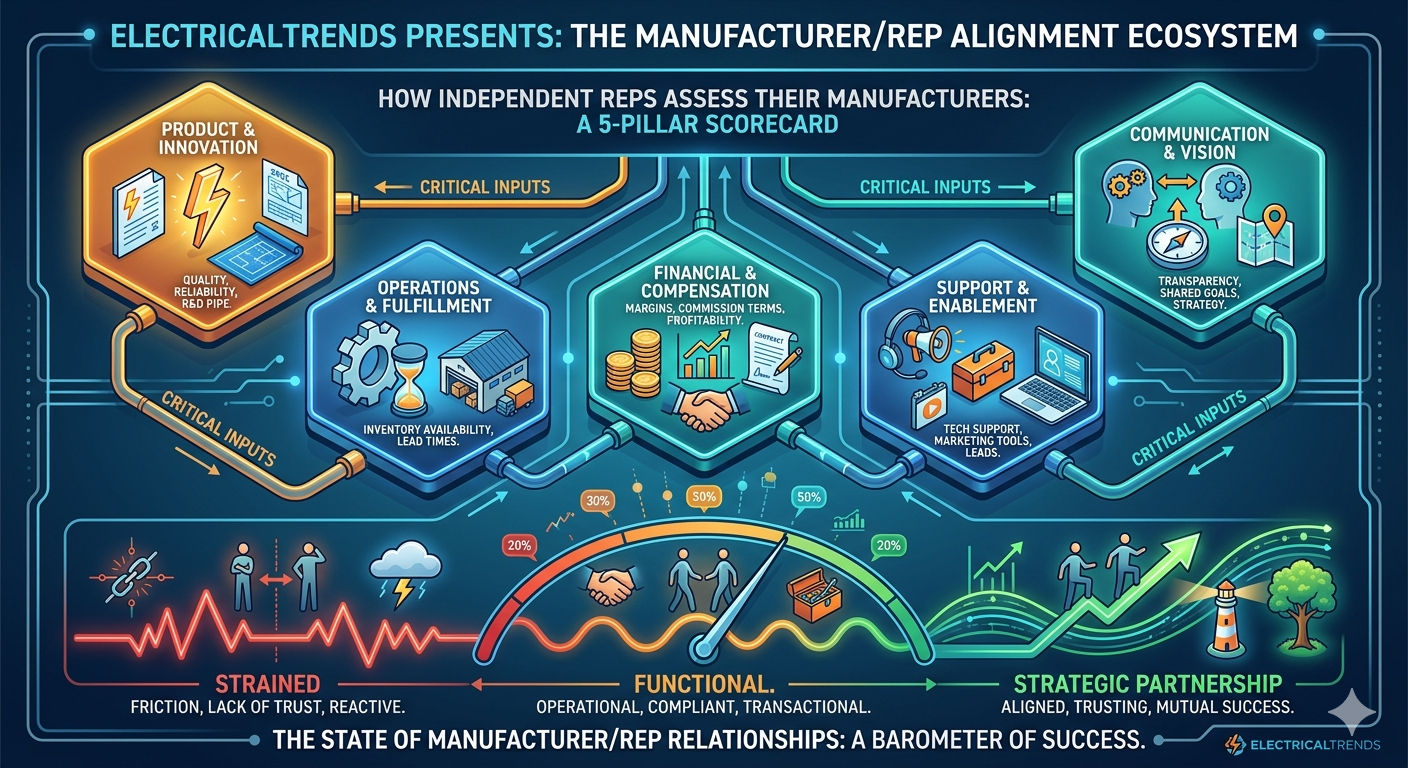
How Do Reps Currently Evaluate Manufacturers
- What is their reputation and are they a market leader?
- Do they have quality products and differentiating products?
- Do they have various vertical strengths that match the agency’s, including support and products?
- Are they privately or publicly held? Are they likely to be purchased or do the purchasing?
- Does the territory being offered match that of the reps?
- Financial strength? Do they have dollars to invest in infrastructure & product development to support the growth they are seeking?
- How much of their expectations are sales related and include training, samples, and support, including necessary access to data?
- Do they have a reputation of consistency in relationships, people, compensation, and expectations?
- Do they understand the electrical industry’s needs and methods rather than just those of Wall Street or PE-ownership?
- Do they have a fair and consistent compensation model? Are they willing to support investments for marketing, distributor support, technology investments, specialists, et al (and this depends upon the need to effectively support the manufacturer.)
- Are they committed long term to the electrical channel?
- Are they selling to anyone directly? If so, do they let us know what their long term selling direct plan will include?
- Is the manufacturer easy to do business? If they are not for the rep, they will not be for customers.
What Complaints Do Reps Have Of Their Manufacturers & Ways For Correction
- Communications: in times where it could be easier, most have digressed. Manufacturers with national accounts for either distribution or users like industrials, contractors, food and beverage or data centers, we seldom hear anything, until we hear it from the customer who inevitably needs some support. Sharing results and opportunities with us would help our efforts at end users also
- Communications: seems 1-way. We are constantly doing all types of reporting without ever hearing back. Meetings attended by manufacturers such as when they NAED, AD, NECA, etc. we used to receive info from 1 on 1 meetings, we do not often now, but we are the field people for fulfilling the promises. It would also be nice to hear about trends that they industry, market, skills, or competitive trends they heard at these events.
- More manufacturers are reducing their head counts and giving us more responsibilities without training us. Some that offer training are now making us pay for their training! And this is without commenting about being compensated for the increased work! Would a direct salesforce pick up the additional work without more pay or more resources? No. They would put together their resume.
- As an aside, have manufacturers ever thought about how reps respond to decreased commissions or more work? While we accept, unfortunately, we also seek other ways to generate income.
- Bonus programs do NOT FUND OPERATIONS! They are also dependent on the manufacturer’s ability to produce, ship and be competitive without the flexibility to be changed. Why? Manufacturers with rebate programs have, in the past, adjusted distributor goals when the manufacturer has had operational issues?
- How many different systems is a representative need access to operate for each of their manufacturers? Why are there so many firewalls often created where reps are unable to see necessary and important information in an era where speed often wins? If we were direct salespeople, would we have access to the information?
- How is a representative evaluated by sales and profitability when each price change or quote must receive various factory approvals before being issued? Give the rep authority and parameters for proper decision making and if poor decisions on his part are being made, a decision on their continuance is certainly justified.
- Some reps are being evaluated by market share, however 4 reps I interviewed claimed to have asked how market share was determined and were not provided a proper answer. Couldn’t the formula or process be shared? Perhaps everyone should be using DISC as a starting point. (and yes, Channel Marketing Group does help manufacturers with this process.)
- Is their mutual trust? Relationships, working together for mutual interests, develop trust which will keep the rep/manufacturer partnership for the long term.
One Throat to Choke
I was playing golf last week with the owner of various electrical contracting companies. I asked him what he misses most in the last 5-10 years in his business. He said he seldom had issues with his distributors or vendors in the past. If he needed help or had an issue he had people to call who could make quick decisions. People he knew and who knew him … and he trusted. Today, he lamented “there are so very few I have confidence in and too many where the person I talk to needs clearance from someone who I don’t know, and they don’t know me.” The end result – delays, frustration, lost opportunities.
The customer feels as though they come second because we no longer treat our people (reps) as being important enough to help run our businesses even on a short term basis.
Are we being “penny wise and dollar foolish?”
What experience do you want to provide to your customers? One of responsiveness or a corporate façade?”



Leave a Reply